Technical SEO audit

Find the technical gaps holding back your website’s search visibility.

We investigate the technical problems affecting your important pages and give your team an evidence-backed list of changes to prioritise.

Aaron CheahLed by Aaron CheahFounder, Multiplier Engine · Kuala Lumpur

Could technical problems be holding your website back?

These are problems a technical audit can investigate. We check the evidence before recommending a change.

01

Your important pages aren’t showing up on Google.

We check whether Google can access and index the page. If it is indexed but rarely appears for relevant searches, we investigate whether the cause is technical or involves relevance or competition.

02

Old links send customers to pages that no longer exist.

A changed URL or missing redirect can leave customers at an error page. We trace the old link and check where it should lead.

03

Your mobile pages are slow or difficult to use.

We check loading, layout and interactions on representative mobile pages, including content that moves and controls that are difficult to use.

04

You have a list of warnings, but no clear starting point.

We separate confirmed problems from warnings, then prioritise affected pages, effort and dependencies so your team knows where to begin.

What you receive from the audit.

A practical fix plan based on affected pages, evidence and business priorities.

01

Findings with affected pages and evidence.

See where each confirmed problem occurs, what the checks found and why it matters. Intentional settings and unanswered questions are recorded separately.

Affected pageObserved issueEvidenceReview approach · Not client evidence
02

A prioritised list of recommended changes.

Understand which issues deserve attention first, based on the important pages affected, confidence, effort and dependencies.

Business relevancePriorityRecommended change
03

Checks your team can use after implementation.

Each recommendation includes a way to check the change. A successful live check is kept separate from later changes in Google’s indexing or search results.

PlanAcceptance check
VerifyLive response
SeparateGoogle’s later state

The audit provides findings and recommendations. Implementation and any retesting are agreed separately in the proposal.


How we investigate an important page.

We compare the page itself, the routes leading to it and the available Google information. This helps us distinguish a confirmed technical problem from something that needs further investigation.

  1. 02Inspect the content

    Check the text, links and resources available on representative templates.

  2. 03Check Google’s information

    Use Search Console where available, distinguishing recorded indexed status from live tests.

  3. 04Follow the links

    Trace how visitors and search engines reach the page, including old addresses.

  4. 05Review the mobile experience

    Check loading, layout movement and important interactions.

The checks follow the agreed site scope and available access.
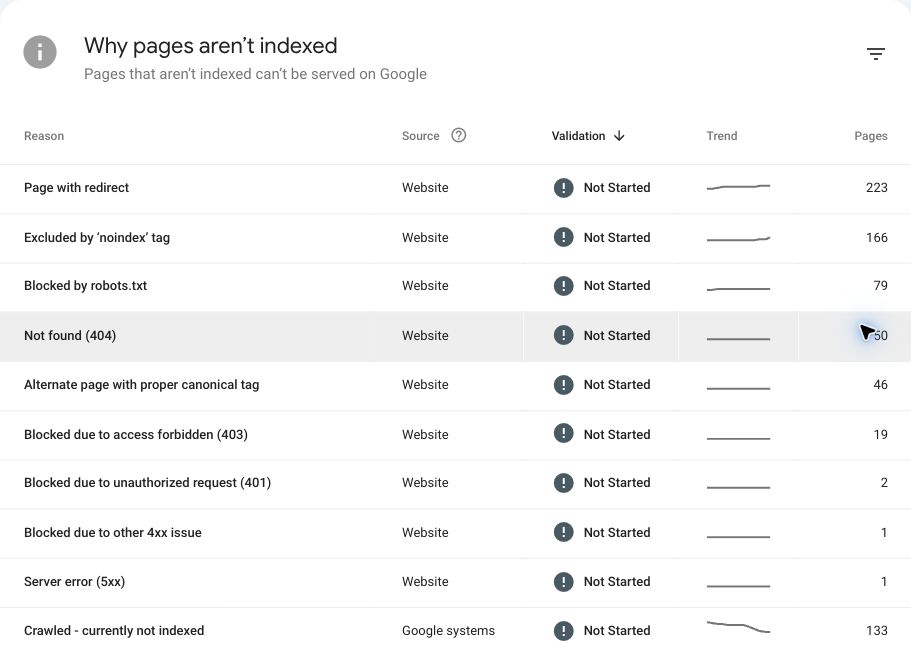
Google Search Console · Why pages aren’t indexed
Actual anonymized indexing report excerpt: excluded by noindex, blocked by robots.txt and not found (404).
We check whether these exclusions are intentional and which important pages need investigation.
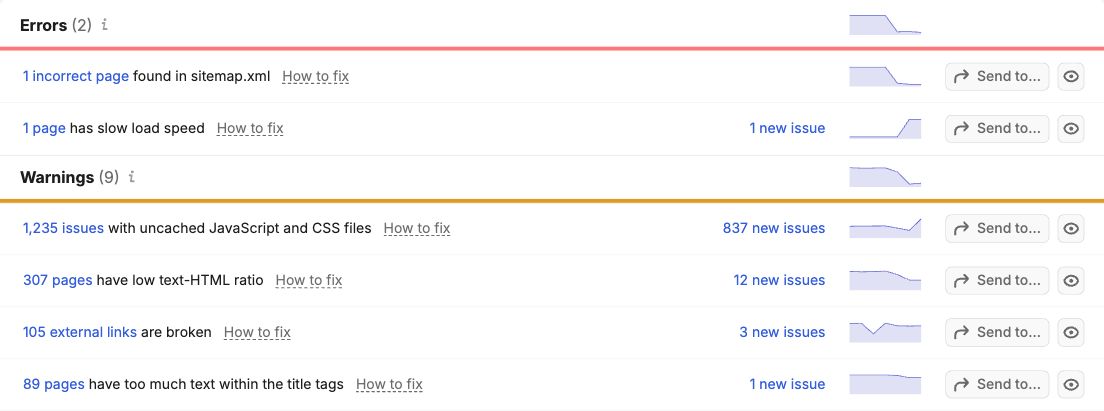
Semrush · Site Audit issues
Actual anonymized site audit excerpt: incorrect page in sitemap.xml and slow page load speed.
We validate crawl findings against the page itself before deciding what needs attention.

Genuine anonymised report excerpts.

What your technical SEO audit checks.

Each area shows what we inspect, what the evidence can tell us and where further work may be needed.

01

Help Google find the page

Crawling and indexing

Check whether important pages can be found, accessed and considered for indexing.

See what this covers

We inspect response codes, robots rules, noindex instructions, sitemaps and available Search Console information. An intentional exclusion is not a defect. A working page is not guaranteed to be indexed or highly ranked.

  • Affected URLs and their intended purpose
  • Crawl restrictions, response errors and indexing instructions
  • Live tests distinguished from Google’s recorded indexed state
02

Send visitors to the right place

Links, redirects and duplicate URLs

Trace broken links and check whether URL changes lead to relevant destinations.

See what this covers

We compare internal links, redirects, preferred-page annotations and sitemap URLs. Ordinary duplicate versions are not automatically harmful; we look for a specific mismatch and explain its effect.

  • Old-to-new URL examples after a redesign
  • Broken destinations and inappropriate redirects
  • Canonical preferences and relevant language or region versions
03

Make important content usable

Rendering and mobile experience

Compare accessible content and test agreed mobile journeys.

See what this covers

We inspect representative templates, rendered text and links, loading, responsiveness and layout movement. Where relevant, we check structured data against visible content. Lab results and real-user data are labelled separately.

  • Rendered text and links checked on representative pages; Google’s rendered-page test used where available
  • Mobile loading, layout stability and interactions
  • Applicable structured-data errors and eligibility limits
04

Give the team a starting point

Priorities and recommended checks

Document the evidence, the recommended change and how to check it.

See what this covers

Each confirmed finding names affected examples, business context, confidence, dependencies and a recommended acceptance check.

  • Plain-English issue register with dated evidence
  • Priority rationale and a recommended implementation owner
  • Acceptance checks, unresolved questions and access limitations

An audit your team can act on.

We agree the scope, investigate the website and prepare the findings for the people who will act on them.

  1. 01

    Agree the scope and available access

    We agree the pages, recent changes and concerns to investigate, then confirm which website information is available and record any access limitations.

  2. 02

    Investigate and explain the findings

    We combine the crawl with manual checks and available Google information, then explain confirmed problems, intentional settings and unresolved questions.

  3. 03

    Prepare the implementation handover

    We group recommendations into practical actions with affected examples, dependencies and checks, and identify who needs to make each change.

See the evidence behind a recommendation.

This controlled demonstration shows an actual page instruction before and after a test change.

Controlled audit demonstration · Not a client result

A public service page is asking search engines not to index it.

We created a local test page with an indexing restriction, then removed that instruction and fetched the same page again. Here is the actual response evidence.

Before: the restriction is present

<meta name="robots" content="noindex">

HTTP 200 · Instruction found in the response

After: the instruction is removed

No robots noindex meta instruction found

HTTP 200 · Same page fetched again

Why it matters
If this page is meant to appear in search, the noindex instruction prevents indexing once Google crawls and processes it. First, confirm that the page is intended to be public and indexable.
Recommended change
Remove an unintended instruction from the page or template. Also check that crawling is allowed and the intended content is available.
What this test verified
This test verifies that the instruction was removed from the response. It does not show that Google has revisited or indexed the page, and it makes no claim about rankings or client results.
See the test method and limits

Tested 30 September 2026. Two HTTP GET requests to the same owned local HTML fixture at /services/office-cleaning/, before and after removing the meta instruction. Both returned HTML with status 200. This is response-source evidence, not a Search Console result or a Google rendering test.

A useful audit finding connects a confirmed issue to an affected page, a reason to act and a specific check. This demonstration illustrates that approach.

Working with Aaron.

Tell us what concerns you about the website and what has changed. We explain the findings and the decisions your team needs to make before changing it.

Aaron reviewing papers during a discussion.
01

Explain what has changed.

Share the pages that concern you, recent website changes and anything you have already noticed.

02

Understand the recommendations.

Discuss why an issue matters, what remains uncertain and which changes deserve attention first.

03

Agree who will handle the fixes.

We help you identify what your developer can implement and whether you want implementation support from our team in the agreed scope.

Is a technical audit the right next step?

Use these questions to prepare for a useful audit conversation. Search Console access helps, but its absence does not automatically rule out an audit.

What is already available?

Questions before your technical SEO audit.

Understand the access we need, what you receive and who handles the changes.

What is a technical SEO audit, and what does it check?

It investigates whether search engines can discover, access and understand your important pages, and where technical problems affect their use. Checks can include indexing instructions, redirects, broken links, duplicate URLs, rendered content and mobile performance. Findings are documented with evidence and prioritised actions, rather than an unexplained list of tool warnings.

How do I know if my website needs a technical SEO audit?

Useful reasons to investigate include important pages missing from Google, an unexplained decline in organic traffic, problems after a redesign or weak visibility despite investment in content. These symptoms do not prove a technical fault. We check the evidence and distinguish technical problems from questions about content, demand or other causes.

Do I need an audit if I already use WordPress, Shopify or WooCommerce?

These platforms handle some technical basics, but themes, plugins, apps, navigation and configuration can still affect how pages are found and used. Using a particular platform does not automatically mean you need an audit. The decision depends on your symptoms, recent changes and website complexity, rather than the platform name alone.

How much does a technical SEO audit cost in Malaysia?

The fee depends on the website’s size, complexity, number of templates and depth of investigation. We agree the pages, checks, deliverables and fee before work starts. Implementation and follow-up checks remain separate scope decisions.

How long does a technical SEO audit take?

Timing depends on the pages and templates involved, technical complexity and the information available. Crawling is only part of the work; findings also need investigation, validation and prioritisation. We confirm the delivery schedule in the proposal. Implementing changes and waiting for Google to revisit pages are separate from delivering the audit.

What will I receive, and how will I know what to fix first?

You receive prioritised findings with affected page or template examples, supporting evidence, recommended changes and acceptance checks your developer can use. Priorities consider business importance, confidence, dependencies and effort. Confirmed problems are separated from intentional settings and unresolved questions, so not every tool warning is treated as an urgent fix.

Does the audit include fixing the issues?

The audit identifies problems and recommends changes. Implementation, developer tickets or a handover can be included in the agreed scope, with an owner for each change. We also agree whether retesting is included before work starts.

What access do you need, and do I have to share passwords?

Start with your website address and the concern you want investigated. Search Console access helps where available; analytics or CMS access is considered only when the agreed work needs it. Use account invitations with appropriate permissions rather than sharing passwords. If information is unavailable, we explain what can be checked and what remains unverified.

Will an audit get my pages indexed or put my website on page one?

No. An audit identifies barriers and recommends changes; it does not guarantee indexing or a search position. A request to crawl a URL is not a promise that Google will index it, and repeated requests do not guarantee faster inclusion. A technically accessible page can still be excluded. For an indexed page that performs poorly, review search intent, usefulness and competition separately from technical access.

How soon will I see results after the fixes?

It depends on the problem, which changes are deployed and when Google revisits the pages. The first step is confirming that the intended technical change is live. We do this if retesting is in the agreed scope; otherwise, your team can use the acceptance checks. After that, indexing or search performance is reviewed separately where relevant. A successful live check is not proof that rankings or traffic have improved, and there is no guaranteed recovery date.

Should I get an audit before or after a website redesign or migration?

Reviewing technical risks before launch can help identify URL, navigation and template decisions that need care. After launch, checks can verify redirects, indexing instructions and whether important pages work as intended. Pre-launch review, migration planning and post-launch verification have different responsibilities, so we agree which of them belong in your scope.

Is a technical SEO audit a one-off, or will I need regular checks?

An audit can establish a starting point, with agreed retests for implemented fixes. Further checks may be useful after major changes, an unexplained traffic drop or a new indexing problem. The frequency depends on the website’s risks and rate of change. Ongoing monitoring is a separate scope decision, not an automatic monthly commitment.

A practical first conversation

Start with the pages that matter.

Tell us which pages or results concern you and whether the website has recently changed. We will help define an audit scope your team can act on.